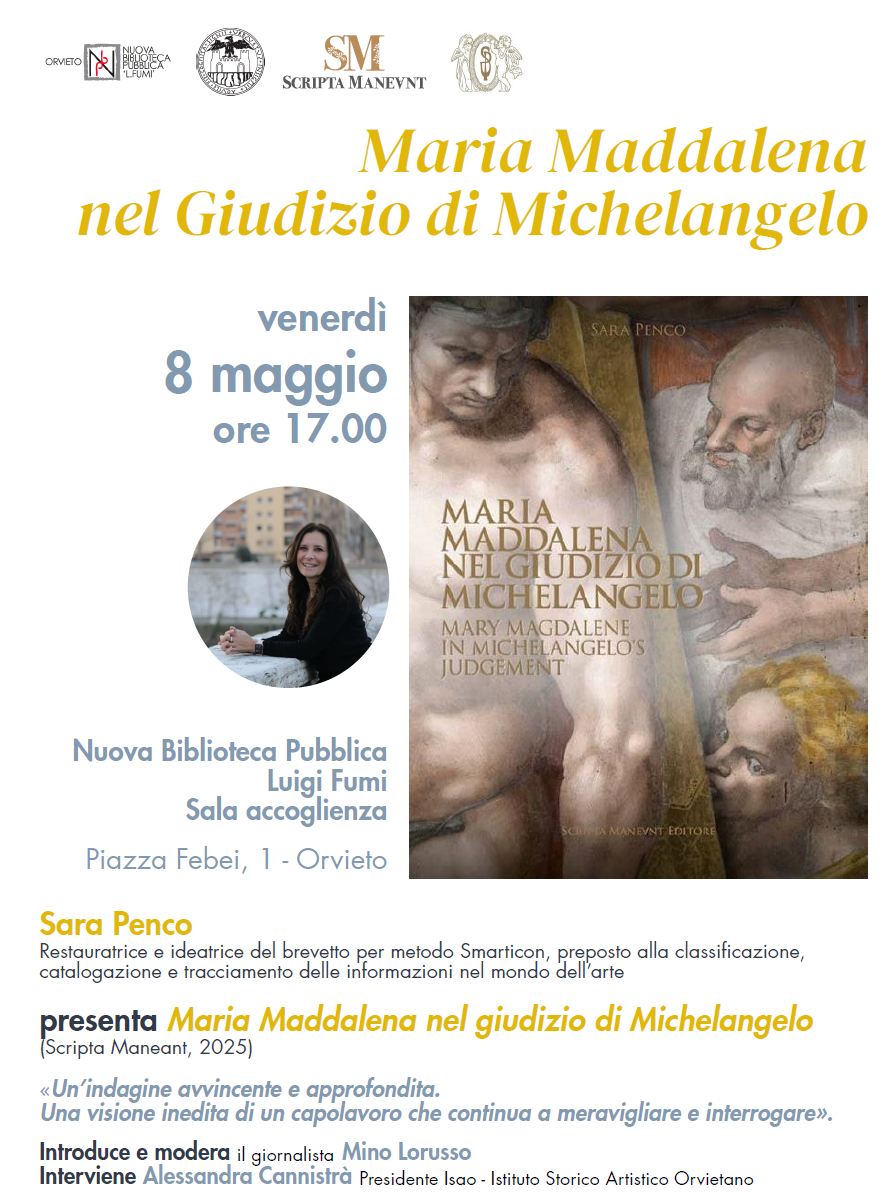
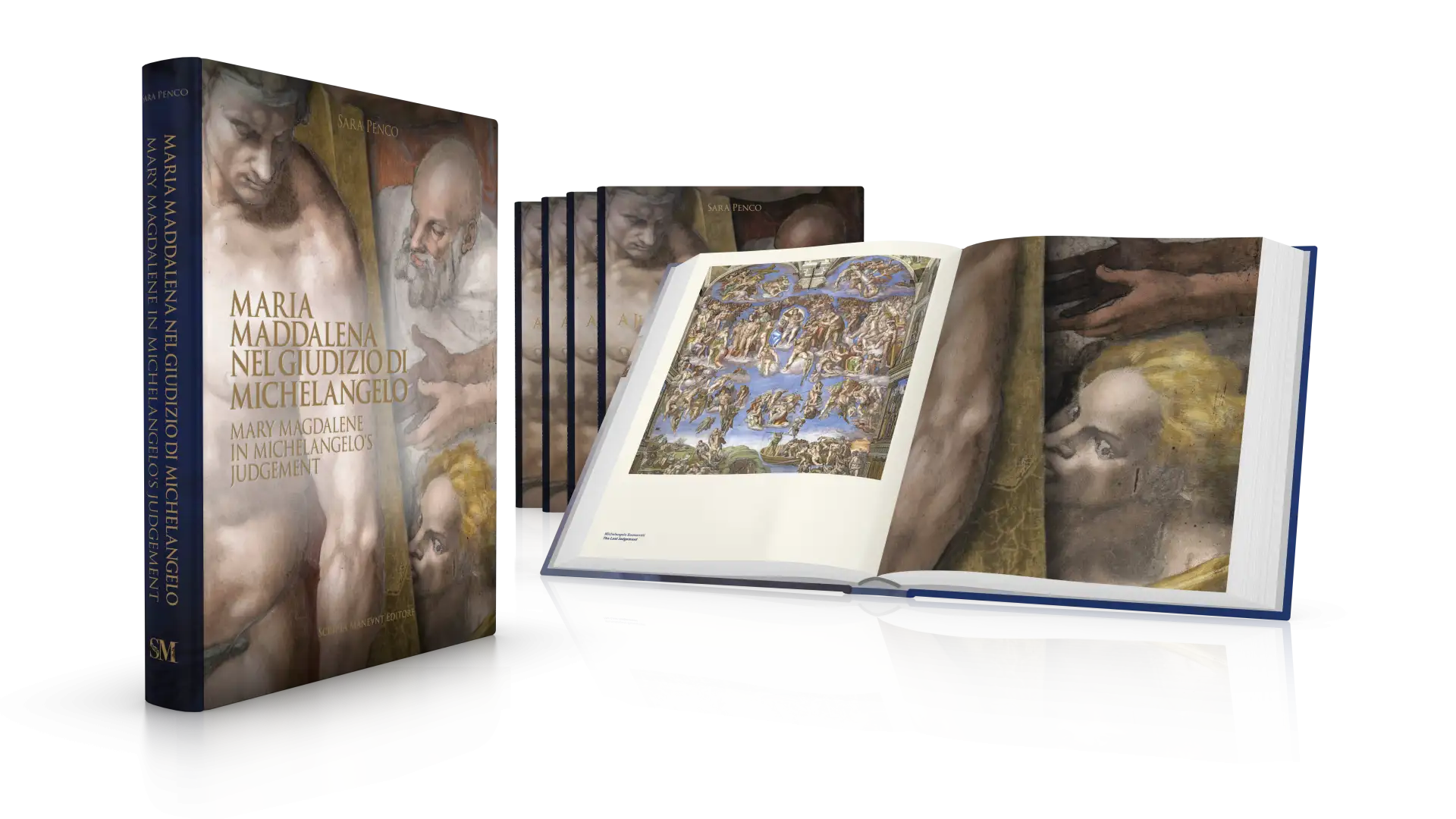
A book by Sara penco, published by Scripta Maneant,
which invites us to a new look on the masterpiece of the Sistine Chapel.
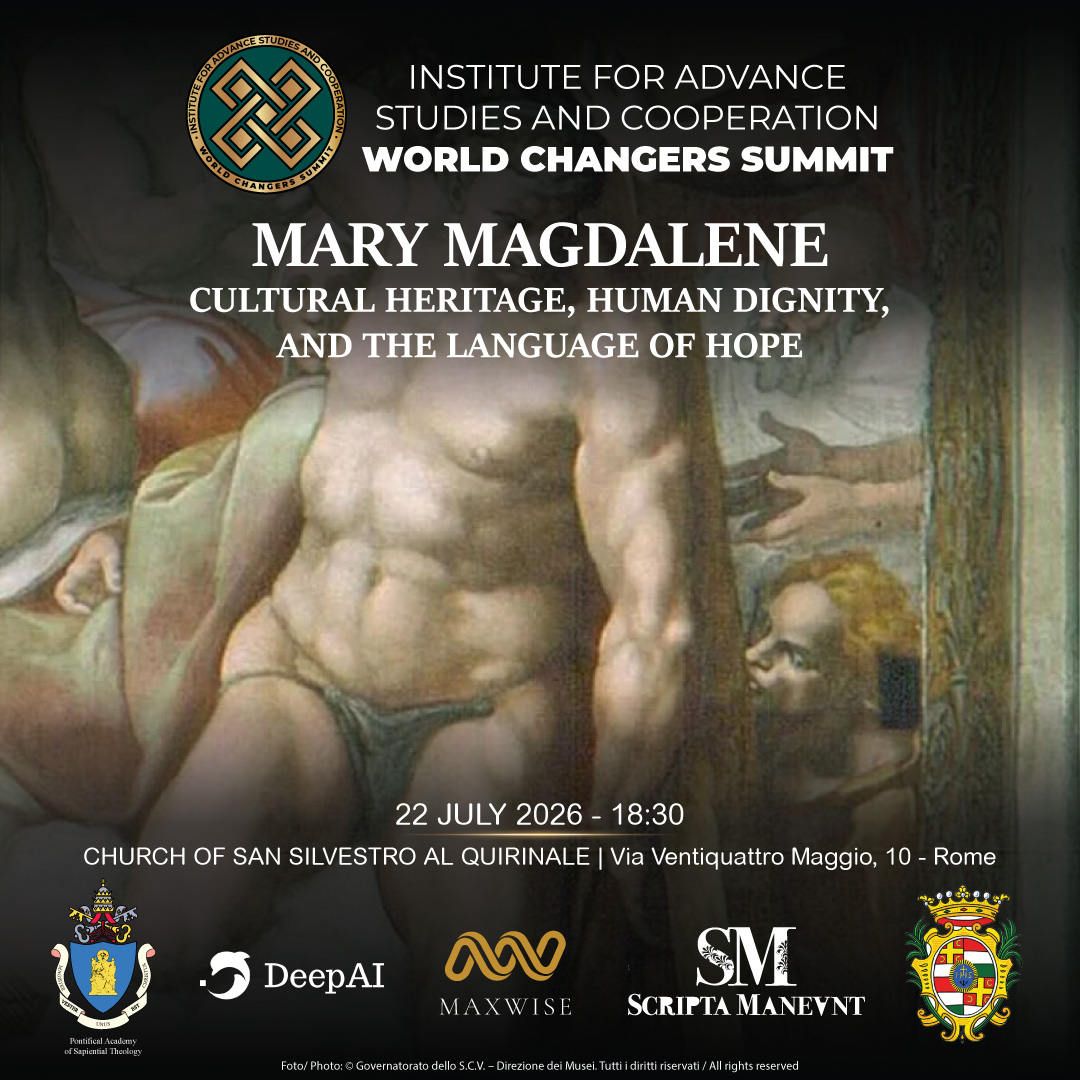
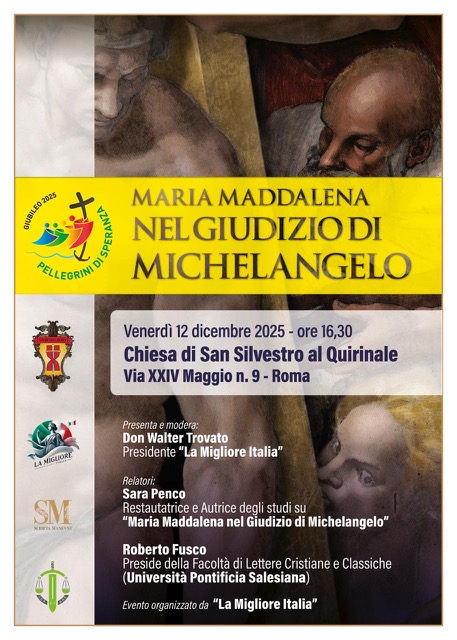
In the volume we analyze the hypothesis that Mary Magdalene may be hidden in the fresco by Michelangelo.
This new interpretation offers a deeper insight into the representation of Mary Magdalene,
that it has often been relegated to a minor or misunderstood role in Christian history
Video from TV2000
Podcast Vaticanews "Maria Maddalena nel Giudizio di Michelangelo - Dritti al cuore 13.12.2024"
A surprising discovery has emerged regarding Michelangelo’s famous Sistine Chapel, particularly in his masterpiece "The Last Judgment".
The Italian art restorer, Sara Penco, has advanced the hypothesis that Mary Magdalene may be hidden in the fresco for almost 500 years. According to Penco, a blonde female figure kissing a cross in the right corner of the fresco could represent Mary Magdalene, one of the most important disciples of Christ. This figure, although discreetly integrated among the other 300 figures of the fresco, was noted for its intimacy with the cross, the yellow dress and the blonde hair, elements that, according to Penco, connect her to Mary Magdalene. In addition, the position of the figure and the interaction with the man holding the cross suggest a significant role.
Michelangelo, with his vast knowledge of the biblical canon and theology, could not have ignored such a central figure in the Gospels.
Sara Penco
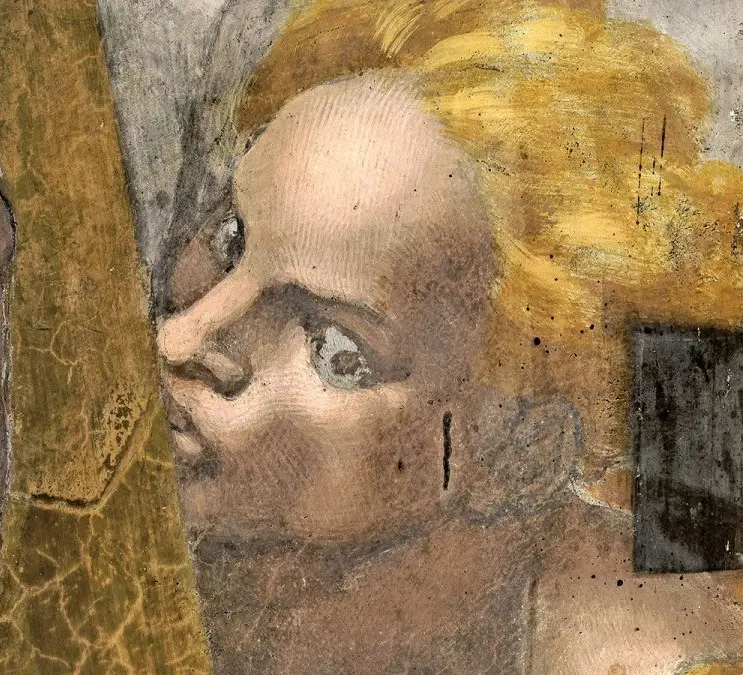
Sara Penco said that the blonde woman who kisses a cross (in the photo) is Maria Maddalena. "Michelangelo was an experienced painter, he was very learned, he knew the dynamics of the church very well, he knew the gospels and could not have forgotten it," he said.
The figure of Mary Magdalene has often been misunderstood throughout history, mistakenly identified as a prostitute, when in fact she was one of the closest disciples to Christ, present at both the crucifixion and resurrection, and is considered the "witness" of the good news of the resurrection. Penco explained that the corner of the fresco, where this figure is located, is as if "shouting" that something was missing, and that Mary Magdalene could fill this historical gap.
Sara Penco’s theory was supported by Professor Yvonne Dohna Schlobitten of the Gregorian University in Rome, who wrote a preface to Penco’s book, where she emphasizes the connection between iconography and theology. The professor added that the presence of Mary Magdalene, if confirmed, would have an important theological role in the context of the fresco, even if the figure appears marginal in the image.


